Share this post
Frequently Asked Questions
What should a catering invoice include?
Business and client details, event date, services, guest count, pricing, extras, applicable taxes, deposits, remaining balance, payment terms, and due date.
How do I create one?
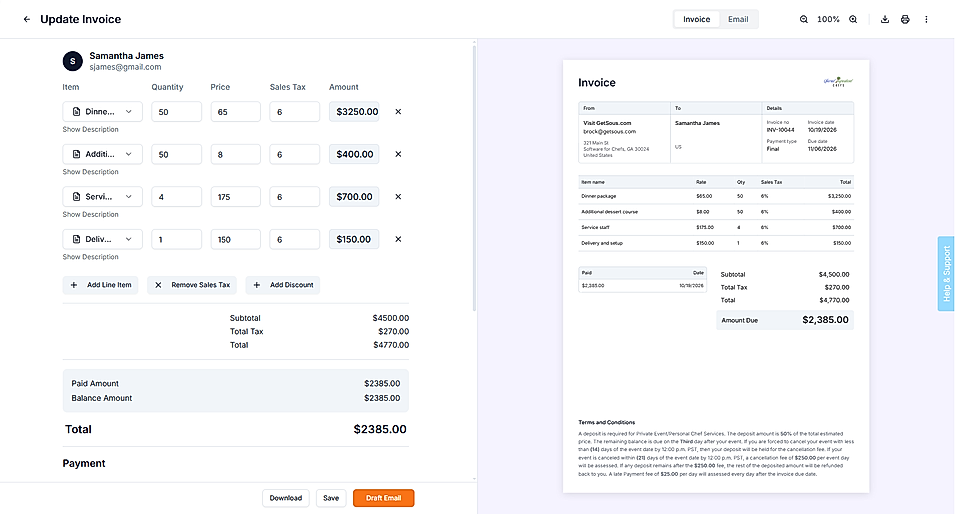
Use a spreadsheet, document template, or invoicing software. Add client and event details, services and quantities, calculate totals, and account for previous payments. Software can automate calculations, delivery, and tracking.
Should I charge per person or use a flat price?
Per-person pricing suits services where guest count drives costs. Flat pricing simplifies packages. You can combine package pricing with separate charges for extras.
Can I charge a deposit?
Yes. Deposits can secure bookings and cover upfront costs. Show the total, required deposit, and remaining balance, and communicate payment and cancellation terms clearly.
How do estimates, quotes, and invoices differ?
Estimate: Approximate cost of proposed work.
Quote: Proposed or agreed price for specific services.
Invoice: Request for payment for services or products being provided.
Terminology varies, but distinguish pricing proposals from payment requests.
Can chefs and caterers accept online payments?
Yes. Payment processors and invoicing platforms support online payment methods, including credit and debit cards. Platforms such as Sous connect payments with invoices and client records.
What is the best invoicing software?
Choose based on your business model. Look for support for your pricing structure, custom line items, deposits, online payments, and tracking. A culinary platform such as Sous may suit businesses seeking connected client, event, menu, and invoice management.