How to Build a Website for Your Personal Chef Business (and Get Found Online)

Starting a personal chef business is one thing. Getting people to find it is another.

You can have an incredible menu, beautiful food photography, and years of culinary experience, but if potential clients can't find you online, you're missing opportunities before they even have a chance to taste your food.

For many personal chefs, caterers, and independent culinary entrepreneurs, building a website is one of the first steps toward establishing a professional business. But having a website isn't the same as having an online presence that helps generate inquiries.

Your website needs to do more than showcase your food. It needs to communicate what you offer, where you work, who you serve, and how someone can hire you.

Here's what to consider when building a website for your culinary business, and how the right tools can make the process easier.

1. Build a Website Around the Services You Actually Offer

One of the biggest mistakes culinary entrepreneurs make is trying to fit everything they do onto a single homepage.

You might offer private chef services, in-home meal prep, catering, cooking classes, or private dining experiences. Each service attracts different clients, answers different questions, and creates different opportunities.

Your website should give each important service room to stand on its own.

For example, consider creating dedicated pages for:

  • Private chef services
  • In-home meal preparation
  • Catering and private events
  • Cooking classes
  • Corporate dining
  • Supper clubs and private dining experiences
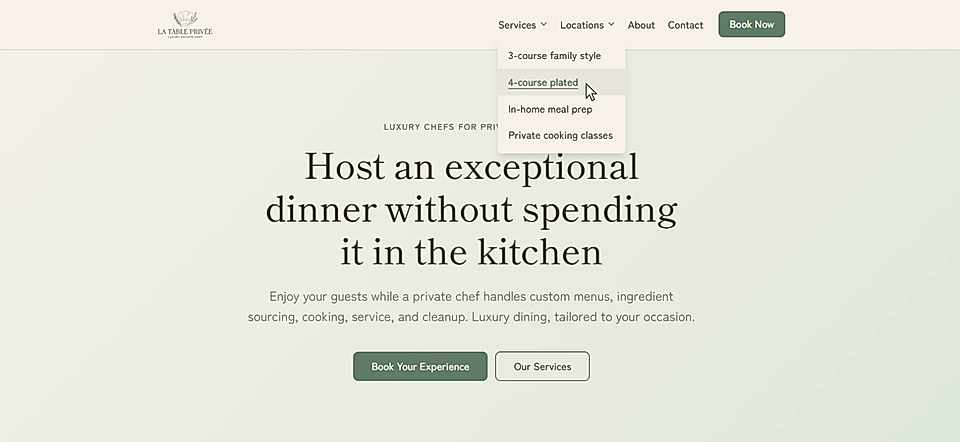
Private chef service homepage with a Services dropdown, dinner-hosting headline, and booking and service buttons.

Each page should explain what the service includes, who it's for, what makes your approach different, and how someone can get started.

This also creates more opportunities for your website to appear when someone searches for a specific service rather than a general term like personal chef.

2. Make Your Service Areas Easy to Find

A personal chef business often serves multiple cities, neighborhoods, and surrounding communities.

Someone searching for a private chef in Alpharetta might not know that you also serve Johns Creek or Suwanee. If your website only mentions your primary location on the homepage, you're potentially overlooking relevant local searches.

Consider creating dedicated location pages for the communities you genuinely serve.

For example:

  • Personal Chef Services in Atlanta

  • Private Chef Services in Buckhead

  • In-Home Meal Prep in Sandy Springs

  • Catering Services in Brookhaven

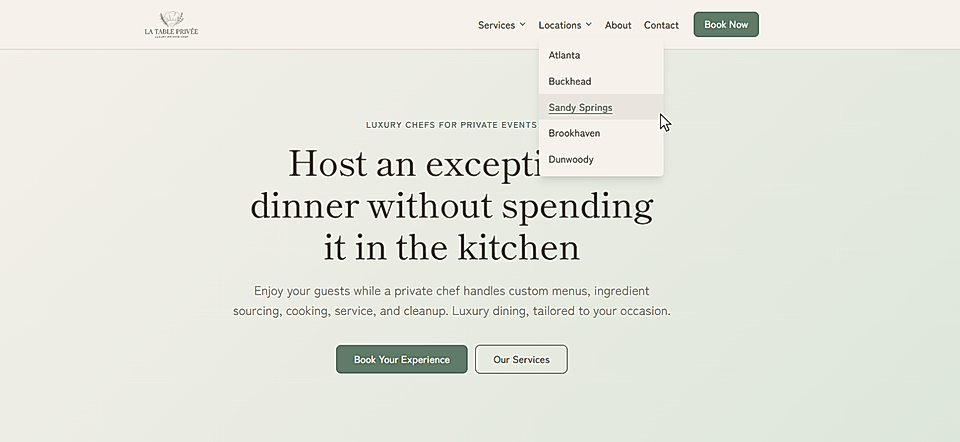
Private chef service website landing page with a locations dropdown open over a headline and booking buttons.

Each page should contain useful, location-specific information rather than simply repeating the same content with a different city name.

Combining dedicated service pages with meaningful location content helps search engines understand what you offer and where you operate.

3. Make It Easy for Potential Clients to Contact You

Getting someone to visit your website is only part of the job. You also need to make it easy for them to take the next step.

Your website should have clear inquiry opportunities throughout the experience.

Consider including:

  • A prominent inquiry button.
  • Dedicated inquiry forms for different services.
  • Clear descriptions of your booking process.
  • Contact information that's easy to find.
  • Testimonials and examples of previous work.
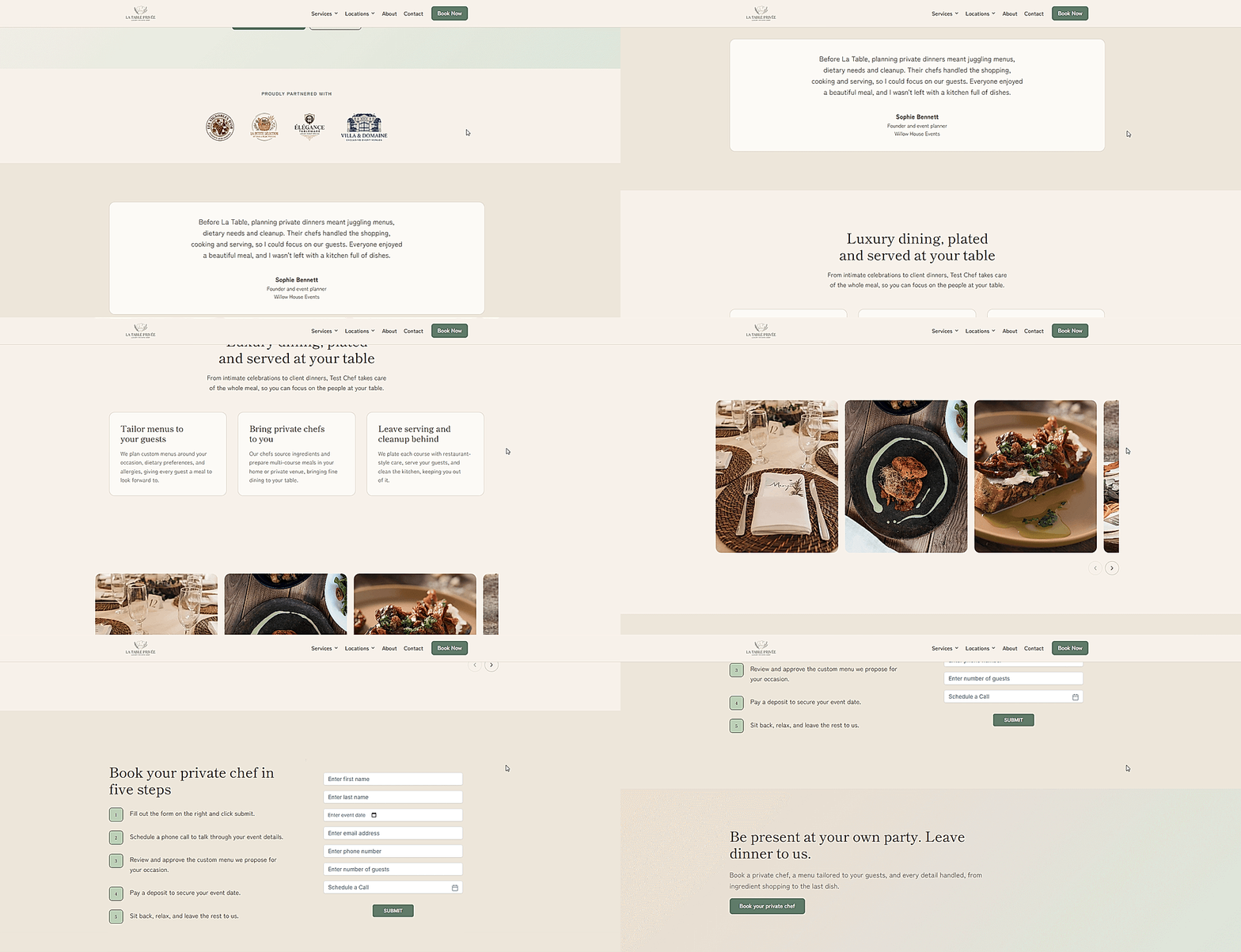
La Table Privée website showing partner logos above a testimonial card and top navigation with a Book Now button.

Think about the information you need before responding to a potential client. For a private dinner, you might want to know the event date, guest count, location, and type of experience they're interested in.

A good inquiry form collects useful information without making the process unnecessarily complicated.

And when someone submits an inquiry, you need a system to manage what happens next.

4. Don't Forget Google and Local Search

Building a website is only the beginning of getting discovered online.

You should also establish a Google Business Profile, which gives your business an opportunity to appear in Google Search and Google Maps when people look for relevant services in your area.

Keep your business information accurate, add photos of your work, list your services, collect genuine customer reviews, and maintain your profile as your business evolves.

Your website and Google Business Profile should reinforce one another.

Your website provides detailed information about your services and service areas. Your profile gives potential clients another way to discover your business and evaluate whether you're the right fit.

Together, they create a stronger foundation for local visibility.

5. Build Your Online Presence as Your Business Grows

Your business today might look very different from your business a year from now.

You might start with private dinners and eventually introduce weekly meal prep, corporate catering, cooking classes, or recurring dining experiences.

Your website should be able to grow with you.

That means having the flexibility to add new service pages, expand into additional locations, publish useful blog content, and update your offerings without rebuilding your entire website, or even individual pages from scratch.

Website editor showing a private chef homepage preview with navigation, booking buttons, and editing controls.

This is where having the right website platform matters.

Introducing LandingRabbit: A Better Way to Build Your Culinary Business Website

We believe independent chefs shouldn't have to become web designers, developers, or SEO specialists just to establish a professional online presence.

That's why we're partnering with LandingRabbit to bring AI-powered website building and online visibility tools into the Sous ecosystem.

LandingRabbit helps culinary entrepreneurs build, manage, and expand their websites without starting from scratch.

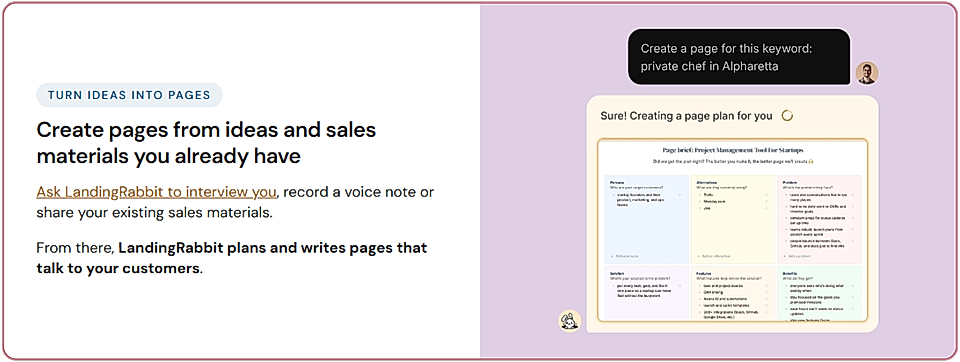
LandingRabbit webpage explains turning sales ideas into customer-focused pages, alongside a chat prompt and page-plan preview.

Create Pages for Your Services and Locations

Instead of relying on a single homepage, you can build dedicated pages around the services you provide and the communities you serve.

Whether you're expanding your private chef services into new cities or introducing a new meal prep offering, LandingRabbit makes it easier to develop the pages that support your online visibility.

Expand Your Website With Content

Your website shouldn't remain static.

LandingRabbit helps you create and manage website content, including additional service pages, location pages, and blog articles that give potential clients more ways to discover your business.

You can continue building your online presence as your services, expertise, and business evolve.

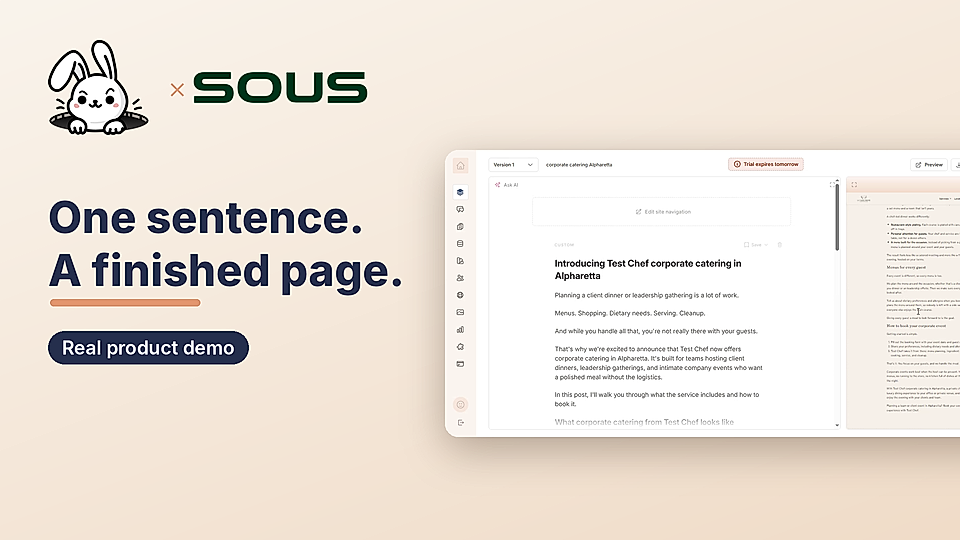
Promotional graphic for SOUS showing a rabbit mascot, the headline “One sentence. A finished page.” and a website editor demo.

Turn Website Visitors Into Inquiries

A website should have a clear path from discovery to becoming a prospective client.

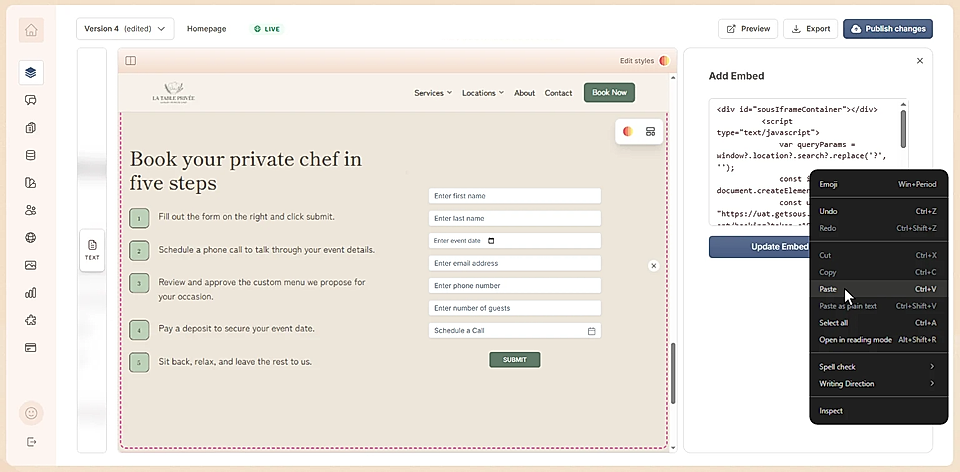
With LandingRabbit and Sous working together, you can incorporate Sous inquiry forms into your website.

Website editor showing a private-chef booking page with a five-step list and form, alongside an embed-code panel and open context menu.

Pictured above: Sous custom form embedded on a chef's LandingRabbit built website

When someone discovers your services and submits an inquiry, their information flows into Sous, where you can manage the opportunity.

From there, you can communicate with the client, organize the event, present menus, send invoices, and manage the rest of the client journey.

Your website helps create the opportunity. Sous helps you turn it into business.

Your Website and Your Business Should Work Together

Building a website shouldn't be the finish line. It should be the foundation for getting discovered, attracting the right clients, and creating more opportunities for your business.

That's why we're bringing LandingRabbit and Sous together.

LandingRabbit helps you build your online presence and expand your visibility. Sous gives you the infrastructure to manage the inquiries, clients, events, and payments that follow.

Two specialized platforms working together to help independent culinary businesses grow.

Available as an Add-On for Sous Users

LandingRabbit is available as an optional add-on for Sous customers, with special subscription pricing exclusively for Sous users.

LandingRabbit is a separate subscription, managed and billed directly through LandingRabbit. It isn't included in your standard Sous subscription.

Whether you're building your first personal chef website or looking to improve the online presence of an established catering business, it's another way to expand what you can accomplish within the Sous ecosystem.

Your craft deserves to be discovered. Your business deserves the infrastructure to grow.

Know a chef who needs this?

Good information travels. Send this to another chef, culinary entrepreneur, or someone building a business around food.

Frequently Asked Questions

What should I put on my personal chef website?

A personal chef website should clearly explain your services, the areas you serve, and what makes your business different. At a minimum, include:

  • A homepage introducing your business

  • Service page(s) explaining your offerings

  • Location pages for the areas you serve

  • A gallery of food, events, and experiences

  • An About page

  • Testimonials or client reviews

  • Contact information and an inquiry form

  • Location or service-area pages

Can I build my website without web design experience?

Yes! LandingRabbit helps you build your website without starting from scratch. You can create service pages, location pages, and blog posts, then add more as your culinary business grows.

How can local clients find my personal chef website?

Create pages that explain your services and the areas you actually serve. Give each location page useful details, not just a different city name. Set up a Google Business Profile too (See our blog on How to Set Up a Google Business Profile) , so you have another way to show up in local searches.

Can I collect Sous inquiries through my website?

Absolutely! You can add a Sous inquiry form to your LandingRabbit website. When someone submits it, their details go into Sous, where you can track the inquiry, plan the event, share menus, and send invoices without copying information between tools.

Is LandingRabbit included in my Sous subscription?

No. LandingRabbit is an optional add-on with special subscription pricing at 50% OFF for Sous users. You'll have a separate subscription managed and billed directly through LandingRabbit.

Do I need LandingRabbit to use Sous?

No. You can use Sous to manage your inquiries, clients, events, menus, and payments without the website add-on. If you'd like to try Sous, you can start a 14-day free trial with no credit card.

How much does it cost to build a personal chef website?

The cost depends on how your website is built, how much customization you need, and whether you're hiring a designer or using a website builder. DIY website builders can be more affordable, while custom-designed websites typically require a larger upfront investment and can cost hundreds or thousands of dollars. Consider ongoing hosting, maintenance, and content costs when comparing options.